Introduction
The term “Beacon Vanguard” has become increasingly associated with the digital transformation efforts of Vanguard, one of the world’s largest and most respected investment management companies. Beacon refers to the redesigned user experience and mobile-focused platform initiative that Vanguard introduced to modernize the way investors interact beacon vanguard with their accounts, portfolios, retirement plans, and financial tools. The platform emerged during a time when mobile investing, fintech innovation, and digital wealth management were rapidly changing investor expectations across the financial industry.
For decades, Vanguard built its reputation on low-cost index funds, passive investing strategies, retirement planning services, and investor-first principles. Founded by John C. Bogle, the company became a global leader in index fund investing and long-term wealth management. However, while Vanguard excelled in investment philosophy and low fees, beacon vanguard many investors believed its digital experience lagged behind competitors such as Fidelity Investments, Charles Schwab, and Robinhood. Beacon was developed as part of Vanguard’s effort to modernize its digital ecosystem and meet the expectations of a new generation of investors.
The Beacon experience represented much more than a simple visual redesign. It reflected broader changes occurring across the financial technology sector, beacon vanguard including the rise of mobile-first investing, cloud-based financial systems, user-friendly investment dashboards, and simplified portfolio management. Although investor reactions to Beacon were mixed, the platform became an important milestone in Vanguard’s ongoing transition toward a more modern digital brokerage experience.
The Background Behind Beacon Vanguard
To understand Beacon Vanguard properly, it is important to understand the environment in which it was created. Over the past decade, financial technology companies dramatically changed how people invest. Investors increasingly moved away from desktop-only platforms and began using smartphones for nearly every aspect of personal finance, including stock trading, beacon vanguard retirement contributions, ETF investing, and portfolio monitoring.
Traditional investment firms faced growing pressure to modernize their software and improve user experience. Younger investors entering the market expected clean mobile interfaces, real-time portfolio tracking, simplified onboarding, and instant account access. beacon vanguard Companies such as Robinhood popularized sleek investing apps that made investing feel accessible and intuitive. As consumer expectations changed, established firms like Vanguard needed to improve their technology infrastructure to remain competitive in the rapidly evolving fintech industry.
Vanguard historically prioritized investment efficiency and low operating costs over flashy digital experiences. Many long-term investors appreciated the company’s focus on fundamentals rather than trends. However, criticism surrounding Vanguard’s older website and mobile applications became increasingly common. beacon vanguard Investors frequently described the older platform as outdated, slow, and difficult to navigate compared to newer fintech competitors. Beacon emerged as Vanguard’s response to these concerns and represented the company’s effort to balance modern usability with its traditional investment philosophy.
The Beacon project also reflected Vanguard’s broader strategy to attract younger investors while maintaining trust among existing clients. beacon vanguard Millennials and Gen Z investors increasingly preferred managing finances through mobile devices rather than desktop computers. Vanguard recognized that digital accessibility would become essential for long-term customer retention and future growth in the competitive brokerage industry.
What Beacon Vanguard Actually Is
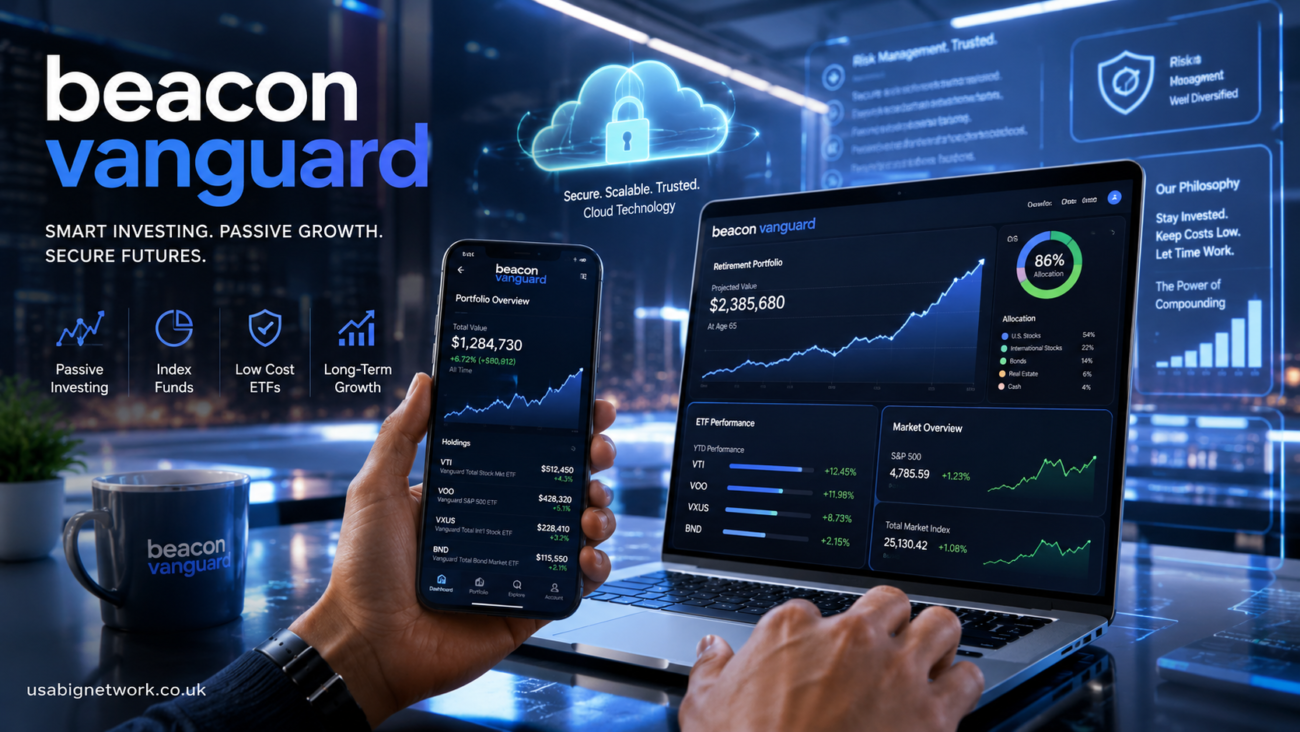
Beacon was introduced as a redesigned digital experience connected to Vanguard’s mobile app and investor platform. In its early stages, beacon vanguard functioned almost like a beta environment where select investors could preview a new interface before broader implementation. The platform focused heavily on simplifying account access, streamlining portfolio views, and improving navigation for mobile users.
One of the primary goals of Beacon was reducing complexity. Traditional investment platforms often overwhelm users with extensive charts, financial reports, beacon vanguard research tabs, and advanced analytical tools. Beacon attempted to present essential information more clearly and make investing feel easier for average users. Investors could quickly check account balances, monitor retirement savings, review holdings, and access investment summaries without navigating through complicated menus.
The platform emphasized modern design principles that are commonly used in mobile app development. Larger text, cleaner layouts, intuitive menus, faster load times, beacon vanguard and simplified dashboards became central parts of the Beacon experience. Vanguard wanted users to interact with their investments in a smoother and less intimidating environment, especially investors who were new to financial markets or retirement planning.
At the same time, Beacon represented a technological modernization effort behind the scenes. Financial platforms increasingly rely on cloud infrastructure, beacon vanguard real-time data processing, integrated APIs, and scalable mobile architecture. Vanguard’s digital transformation included upgrading many of its internal systems to support a more agile and responsive investing experience. Beacon became one visible part of that broader modernization strategy.
How Beacon Changed the Vanguard User Experience
The introduction of Beacon significantly altered how many investors interacted with Vanguard accounts on mobile devices. Older Vanguard systems often emphasized detailed financial information and traditional brokerage functionality. beacon vanguard Beacon shifted toward simplicity, accessibility, and mobile responsiveness. The redesign made it easier for users to quickly understand their financial position without sorting through dense account pages.
One of the most noticeable improvements involved account dashboards. Investors gained access to streamlined portfolio summaries showing balances, beacon vanguardasset allocations, retirement progress, and recent activity in a cleaner visual format. This simplified structure aligned with broader user experience trends in fintech applications, where clarity and speed are prioritized over information-heavy layouts.
Navigation also became more touch-friendly. Mobile users could move between investment accounts, retirement funds, transaction history, and profile settings more efficiently. beacon vanguard The updated interface reduced the number of steps required to complete common actions such as checking balances or reviewing portfolio performance. Vanguard understood that convenience and usability were becoming increasingly important factors for customer satisfaction.
Another important aspect of the Beacon experience was visual modernization. Older brokerage platforms often looked dated compared to newer investing apps. Beacon introduced a more contemporary design language that felt closer to beacon vanguard modern banking and fintech applications. While appearance alone does not determine investment quality, user-friendly design can significantly improve engagement and accessibility for everyday investors.
Despite these improvements, the transition was not universally praised. Some longtime Vanguard users felt the redesign removed valuable analytical tools and reduced the depth of information available within the app. Investors who preferred detailed reporting, beacon vanguard dividend analysis, advanced performance metrics, and in-depth account customization sometimes found the new interface overly simplified. These mixed reactions became one of the defining characteristics of Beacon’s rollout.
Why Vanguard Needed Digital Modernization
Vanguard’s decision to modernize its platform was influenced by several major industry trends. The first was the rapid growth of fintech-driven competition. Mobile investing apps transformed investor expectations regarding usability, onboarding speed, and accessibility. Companies that failed to modernize risked appearing outdated regardless of their investment performance or reputation.
Another major factor involved changing investor demographics. Younger investors entering the financial markets expected mobile-first experiences similar to those offered by modern banking apps and consumer technology platforms. beacon vanguard These users wanted instant access to account information, intuitive navigation, personalized notifications, and seamless digital experiences across devices.
The rise of commission-free trading also intensified competition in the brokerage industry. As trading fees disappeared across many platforms, customer experience became an increasingly important differentiator. Investors could easily switch between brokerages if one platform offered a smoother or more engaging digital experience. beacon vanguard Vanguard recognized that technological improvements were necessary to maintain competitiveness in this evolving environment.
Cybersecurity and account protection also played important roles in Vanguard’s digital transformation. Modern investment platforms must balance convenience with strong security standards. Beacon continued supporting multi-factor authentication, beacon vanguard encrypted login systems, secure account monitoring, and fraud prevention measures. As cyber threats targeting financial institutions became more sophisticated, maintaining investor trust required continuous investment in digital security infrastructure.
Vanguard’s modernization efforts additionally reflected the growing importance of automation and scalable technology systems within financial services. Cloud-based infrastructure, integrated analytics, AI-driven personalization, and digital financial planning tools are becoming increasingly central to modern investing platforms. Beacon positioned Vanguard to participate more effectively in this technological evolution.
Investor Reactions and Public Feedback
Investor response to Beacon Vanguard was highly divided, particularly among long-term Vanguard clients. Some investors welcomed the redesign and believed Vanguard finally began addressing longstanding usability concerns. These users appreciated the cleaner interface, improved mobile responsiveness, and more approachable account layout. For newer investors, Beacon often felt less intimidating than traditional brokerage platforms.
However, experienced investors expressed frustration about missing features and reduced functionality. Many longtime users relied on detailed performance reporting, transaction analysis, cost basis tracking, dividend information, and advanced research capabilities. Some investors felt the redesign prioritized aesthetics over practical investing tools. Online investing communities frequently discussed concerns about reduced customization and limited access to advanced account data.
These reactions reflected a broader challenge facing financial technology companies. Designing a platform that satisfies both beginner investors and highly experienced users is extremely difficult. Simplicity improves accessibility for casual users, but advanced investors often demand deeper analytical capabilities and greater control over account information.
Despite criticism, many investors acknowledged that large-scale digital transitions are complex and often require gradual refinement. Some missing features were later reintroduced or improved as Vanguard continued updating the platform. Others believed the company was attempting to rebuild its digital infrastructure in stages rather than permanently removing functionality.
The Beacon rollout also highlighted how emotionally attached many investors become to financial platforms they use regularly. Investment accounts involve retirement savings, long-term wealth management, and personal financial security. Even relatively small interface changes can generate strong reactions when users rely heavily on familiar systems for important financial decisions.
Beacon Vanguard and Mobile-First Investing Trends
Beacon represented Vanguard’s recognition that mobile investing is now central to the financial industry. Over the past decade, smartphones became the primary financial management tool for millions of people worldwide. Investors increasingly expect to monitor portfolios, make contributions, review retirement progress, and receive market updates directly from mobile devices.
This mobile-first transformation changed how investment platforms are designed. Financial companies now prioritize responsive layouts, touch-friendly navigation, fast loading speeds, and simplified interfaces that work efficiently on smaller screens. Traditional desktop-oriented systems often struggle to meet the expectations of modern mobile users.
The success of fintech companies accelerated these trends. Platforms such as Robinhood demonstrated how effective mobile design could attract millions of new investors, especially younger demographics. Features like instant notifications, simplified trading flows, and visually engaging dashboards became increasingly common across the industry.
Beacon aligned with these broader trends by focusing heavily on mobile usability and accessibility. Vanguard understood that future growth would depend partly on its ability to deliver a competitive digital experience for smartphone users. As investing becomes more integrated into everyday mobile life, companies with outdated platforms risk losing relevance among younger generations of investors.
The rise of mobile-first investing also changed investor behavior. Many users now check portfolios multiple times daily, monitor market news in real time, and expect immediate access to account information. Financial platforms must therefore balance convenience, performance, security, and educational value within a compact mobile environment.
The Connection Between Beacon and Vanguard’s Core Philosophy
Although Beacon focused on digital modernization, the platform still reflected Vanguard’s traditional investment philosophy in important ways. Vanguard has consistently promoted long-term investing, diversification, retirement planning, and low-cost index funds rather than speculative short-term trading strategies. The Beacon interface appeared designed to support that philosophy through its simplified and goal-oriented structure.
Many modern trading apps encourage frequent activity through aggressive notifications, social features, and gamified investing experiences. Vanguard historically avoided that approach. Instead, the company emphasized disciplined investing, patience, and long-term financial planning. Beacon’s streamlined design reduced unnecessary distractions and focused more heavily on overall portfolio health rather than constant market speculation.
This philosophy remains one of Vanguard’s defining strengths. The company built enormous trust among investors by prioritizing investor outcomes and minimizing investment costs. Founded on the principles established by John C. Bogle, Vanguard became synonymous with passive investing and index fund growth. Beacon’s simplified experience aligned with the idea that investing should feel manageable rather than overwhelming.
The platform also reflected Vanguard’s emphasis on accessibility. Simplifying financial tools can help reduce barriers for beginner investors who may feel intimidated by complex brokerage platforms. By presenting information more clearly, Beacon supported Vanguard’s broader mission of helping ordinary investors build long-term wealth through disciplined investment strategies.
At the same time, Vanguard continues facing pressure to satisfy advanced investors who want deeper analytical tools alongside simplified interfaces. Balancing these competing demands will remain a major challenge as the company continues evolving its digital ecosystem.
The Role of Technology in Vanguard’s Future
The future of Vanguard’s digital strategy will likely involve far more than interface redesigns. Financial technology is evolving rapidly, with artificial intelligence, predictive analytics, automation, and personalized financial planning becoming increasingly important. Modern investors expect platforms to deliver not only account access but also meaningful financial insights and guidance.
AI-powered investing tools are already transforming the financial industry. Many platforms now provide automated portfolio recommendations, retirement forecasting, savings analysis, and personalized investment suggestions. Vanguard has invested heavily in digital advisory services and automated wealth management solutions that combine technology with long-term investment principles.
Cloud computing and scalable infrastructure will also continue shaping the future of brokerage platforms. Investors expect real-time data synchronization, instant updates, and seamless experiences across devices. Modern cloud-based systems help financial firms improve speed, reliability, and operational flexibility while supporting millions of users simultaneously.
Cybersecurity will remain another critical focus area. As financial services become increasingly digital, protecting investor accounts from cyber threats grows more important every year. Vanguard’s continued investment in authentication systems, encrypted communications, fraud monitoring, and secure infrastructure will remain essential for maintaining customer trust.
Digital education may also become a larger part of Vanguard’s ecosystem moving forward. Many investors seek guidance on retirement planning, ETF investing, index funds, tax efficiency, and portfolio diversification. Future versions of Vanguard’s platform could integrate more educational resources, personalized financial tools, and AI-assisted planning features to support long-term investor success.
The Lasting Impact of Beacon Vanguard
Beacon Vanguard represents an important stage in Vanguard’s ongoing transformation from a traditional investment management company into a modern digital financial platform. The project highlighted the growing importance of user experience, mobile accessibility, and technology-driven investing within the financial industry.
Although the rollout generated mixed feedback, Beacon demonstrated Vanguard’s willingness to evolve and adapt to changing investor expectations. The platform reflected broader industry shifts toward simplified interfaces, mobile-first design, cloud infrastructure, and digital financial engagement. These trends will likely continue shaping the future of investing for many years.
The Beacon experience also revealed the challenges financial institutions face when modernizing legacy systems. Investors want platforms that are both easy to use and information-rich. Beginner investors often prefer simplicity, while experienced investors demand advanced tools and detailed analytics. Successfully balancing these needs remains one of the most difficult aspects of financial platform development.
For Vanguard, the long-term success of its digital transformation will depend on maintaining the trust and credibility that made the company successful in the first place. Investors continue valuing Vanguard’s low fees, long-term philosophy, retirement expertise, and investor-first principles. Technology improvements must support those strengths rather than replace them.
Conclusion
Beacon Vanguard symbolizes a major evolution in how Vanguard approaches digital investing and investor engagement. The platform emerged during a time of rapid fintech innovation, mobile investing growth, and changing consumer expectations across the financial industry. By modernizing its interface and prioritizing mobile accessibility, Vanguard sought to remain competitive while continuing to serve millions of long-term investors worldwide.
The Beacon initiative demonstrated both the opportunities and challenges involved in transforming a legacy investment platform. Simplified dashboards, cleaner navigation, and improved mobile usability made investing more approachable for many users. At the same time, some experienced investors expressed concerns about reduced functionality and limited analytical tools during the transition process.
Ultimately, Beacon should be viewed as part of Vanguard’s broader long-term digital transformation rather than a single standalone application. The financial industry continues evolving toward AI-driven personalization, cloud-based infrastructure, integrated financial planning, and mobile-first investing experiences. Vanguard’s ability to combine technological modernization with its trusted investment philosophy will play a critical role in its future success.
As investing becomes increasingly digital, platforms like Beacon will continue influencing how investors interact with retirement accounts, ETFs, index funds, and wealth management tools. Vanguard’s challenge moving forward will be maintaining the balance between simplicity, innovation, functionality, and investor trust that has defined the company for decades.
