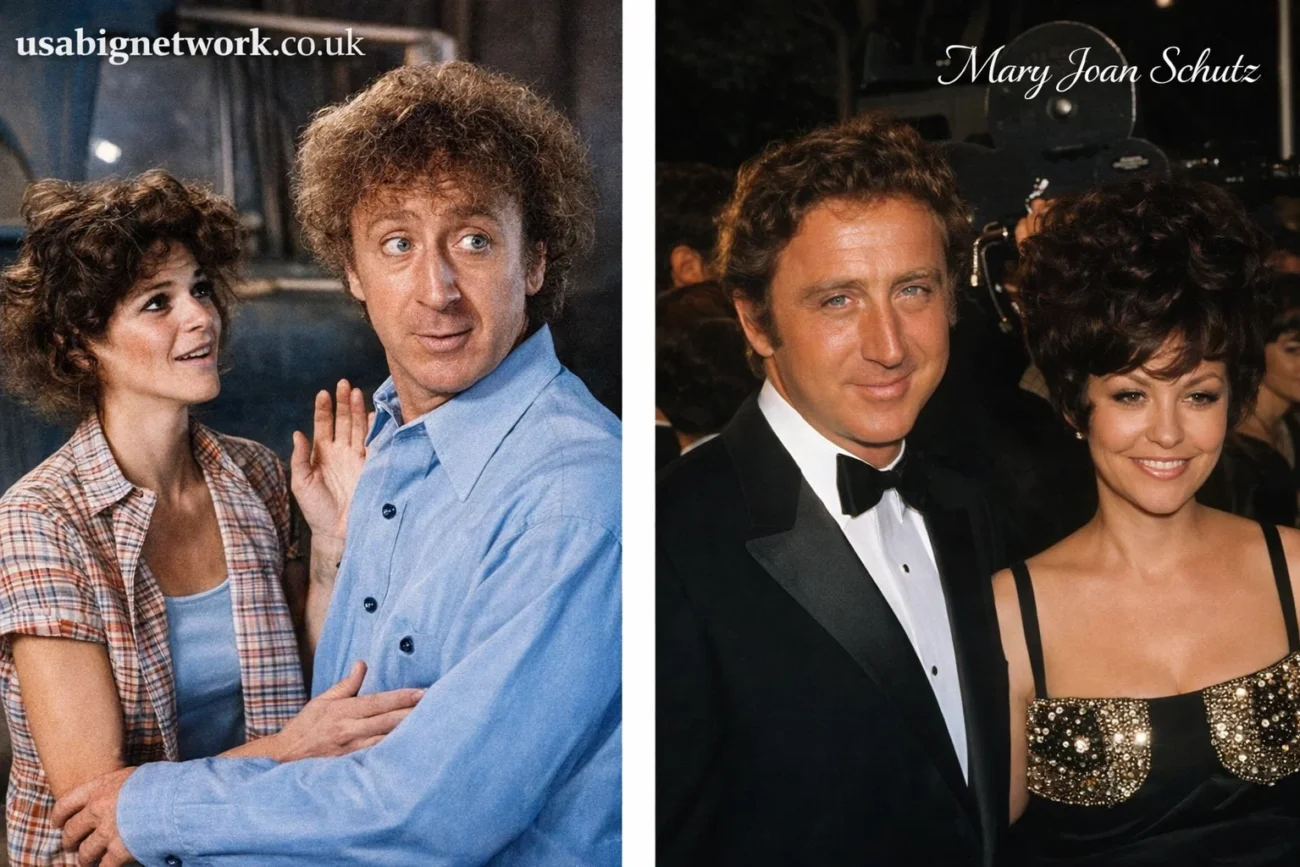
Mary Joan Schutz: A Private Life Connected to Hollywood History
Mary Joan Schutz is widely recognized for her connection to legendary actor Gene Wilder, yet her life extends beyond that association into a story defined by privacy, family values, and quiet resilience. Unlike many individuals linked to Hollywood figures, she chose not to pursue public attention, and as a result, much of her life remains deliberately shielded from media exposure. This discretion has contributed to the sense of curiosity surrounding her name, making her an intriguing figure in entertainment history.
Her story is often explored in the context of Gene Wilder’s early personal life and relationships, but Mary Joan Schutz herself represents a different narrative—one that prioritizes family stability over fame. While public records about her are limited, her role as a partner, mother, and individual reflects a grounded approach to life that contrasts with the visibility of Hollywood culture.
Early Life and Background
Mary Joan Schutz was born in the United States, reportedly in Pennsylvania, during the late 1930s. Her upbringing took place in a typical American environment, far removed from the entertainment industry that would later bring her indirect recognition. Details about her parents, education, and early ambitions are not widely documented, which aligns with her consistent preference for maintaining a private existence.
Growing up during a period marked by significant social and economic change in the United States, Schutz experienced a traditional lifestyle shaped by mid-20th-century values. These formative years likely influenced her later decisions, particularly her emphasis on family and discretion. Her early life, though not publicly detailed, played an important role in shaping the person she would become before entering a relationship that brought her closer to the world of entertainment.
Meeting Gene Wilder and Forming a Relationship
Mary Joan Schutz’s life took a notable turn when she met Gene Wilder in the mid-1960s. At the time, Wilder was still building his acting career and had not yet achieved the widespread fame that would come with films such as Willy Wonka & the Chocolate Factory and collaborations with Mel Brooks. Their meeting was not a product of Hollywood publicity but rather a personal connection formed through mutual circles.
Their relationship developed during a time when Wilder was transitioning into more prominent roles in theater and film. Schutz, already a mother, brought her daughter Katharine into the relationship, and Wilder quickly formed a close bond with her. This connection became a defining aspect of their early relationship, reflecting a shared commitment to family and emotional connection that went beyond professional ambitions.
Marriage and Family Life
Mary Joan Schutz and Gene Wilder were married in 1967, marking the beginning of a family-oriented chapter in both of their lives. Their marriage coincided with a period of growing recognition for Wilder, whose career was gaining momentum in Hollywood. Despite the increasing public attention surrounding Wilder, Schutz maintained a low profile, choosing not to engage with media or public appearances.
During their marriage, Wilder adopted Katharine, Mary Joan Schutz’s daughter, formally becoming her father. This decision strengthened the family unit and demonstrated the depth of their relationship at the time. Schutz’s role within the family centered on providing stability and support, allowing Wilder to pursue his career while maintaining a home environment rooted in personal connection rather than public visibility.
Life During Gene Wilder’s Rising Fame
As Gene Wilder’s career advanced, particularly in the late 1960s and early 1970s, Mary Joan Schutz found herself indirectly connected to the growing spotlight of Hollywood. Wilder’s performances in critically acclaimed films brought him recognition and admiration, which naturally extended attention toward his personal life, including his marriage.
Despite this, Schutz consistently avoided the limelight. She did not participate in interviews or public events, and she refrained from using her association with Wilder for media exposure. Her approach reflects a conscious decision to maintain boundaries between public fame and private life. This separation allowed her to preserve a sense of normalcy even as her husband became increasingly well-known.
Challenges and the End of the Marriage
After several years of marriage, Mary Joan Schutz and Gene Wilder divorced in 1974. The end of their relationship marked a significant turning point for both individuals. While the reasons for their separation have been discussed in various contexts, Schutz herself did not publicly comment on the matter, maintaining her consistent stance on privacy.
The divorce occurred during a period of emotional difficulty for Wilder, who later acknowledged the personal impact of the separation. For Schutz, the transition likely involved adjusting to life away from a shared family structure that had included both her daughter and Wilder as a parental figure. Following the divorce, she stepped even further away from public association with Hollywood.
Life After Divorce and Personal Privacy
Following her separation from Gene Wilder, Mary Joan Schutz chose to live a life away from public attention. She did not remarry in the public eye, nor did she engage in media discussions about her past relationship. This decision reinforced her longstanding preference for privacy and independence.
Her post-divorce life is largely undocumented, which is consistent with her earlier behavior. By avoiding public exposure, she ensured that her personal experiences remained her own rather than subjects of public speculation. This approach highlights a deliberate effort to maintain control over her narrative, even in the face of public curiosity.
Relationship with Family and Personal Values
Mary Joan Schutz’s identity is closely tied to her role as a mother. Her daughter Katharine, who was adopted by Gene Wilder, remained an important part of her life. The family dynamic established during her marriage continued to influence her personal journey, emphasizing the importance of parental bonds and emotional support.
Her personal values appear to center around loyalty, discretion, and stability. These qualities are reflected in her decision to avoid publicity and maintain a life focused on personal relationships rather than external recognition. In many ways, her life exemplifies a perspective that prioritizes internal fulfillment over public acknowledgment.
Public Perception and Media Interest
Although Mary Joan Schutz has remained largely out of the public eye, her association with Gene Wilder has kept her name relevant in biographical discussions and entertainment history. Media coverage of Wilder often includes references to her as part of his early personal life, particularly in discussions of his first marriage and family experiences.
Despite this attention, Schutz has not contributed to shaping her public image through interviews or statements. As a result, public perception of her is largely based on limited historical references rather than personal accounts. This absence of self-promotion has contributed to a respectful, if distant, curiosity about her life.
Legacy and Lasting Significance
Mary Joan Schutz’s legacy is not defined by public achievements or celebrity status, but rather by her role within a significant personal chapter in the life of Gene Wilder. Her influence is most evident in the family structure she helped build and the stability she provided during an important phase of Wilder’s early career.
Her story also highlights an alternative perspective on individuals connected to fame. Rather than seeking recognition, she demonstrated that it is possible to maintain dignity and privacy while being associated with a prominent public figure. This approach gives her life a quiet but meaningful place within broader entertainment history.
Mary Joan Schutz in Historical Context
In the broader context of Hollywood history, Mary Joan Schutz represents individuals whose lives intersect with fame without being defined by it. Her experience reflects the realities of many spouses and family members who support public figures while choosing to remain outside the spotlight themselves.
Her life serves as an example of how personal identity can remain distinct even when connected to a well-known individual. By maintaining her privacy and focusing on family, Schutz created a legacy rooted in personal values rather than public recognition. This distinction continues to make her a figure of interest for those studying the personal lives behind celebrity culture.
Conclusion
Mary Joan Schutz’s life offers a meaningful perspective on privacy, family, and personal identity within the context of Hollywood history. While she is often remembered for her marriage to Gene Wilder, her story is not limited to that relationship. Instead, it reflects a deliberate and consistent choice to live away from public attention, prioritizing personal values over fame or media recognition.
Her role as a mother, partner, and private individual highlights the importance of stability and emotional grounding, especially during a time when her life intersected with a rising star in the entertainment industry. Even after her marriage ended, she continued to uphold the same principles of discretion and independence, maintaining a life largely outside the public narrative.
Ultimately, Mary Joan Schutz stands as an example of how a person can remain influential in quieter, less visible ways. Her legacy is not measured by public appearances or professional accolades, but by the strength of her personal choices, her commitment to family, and her ability to preserve dignity in a world often driven by visibility and fame.
