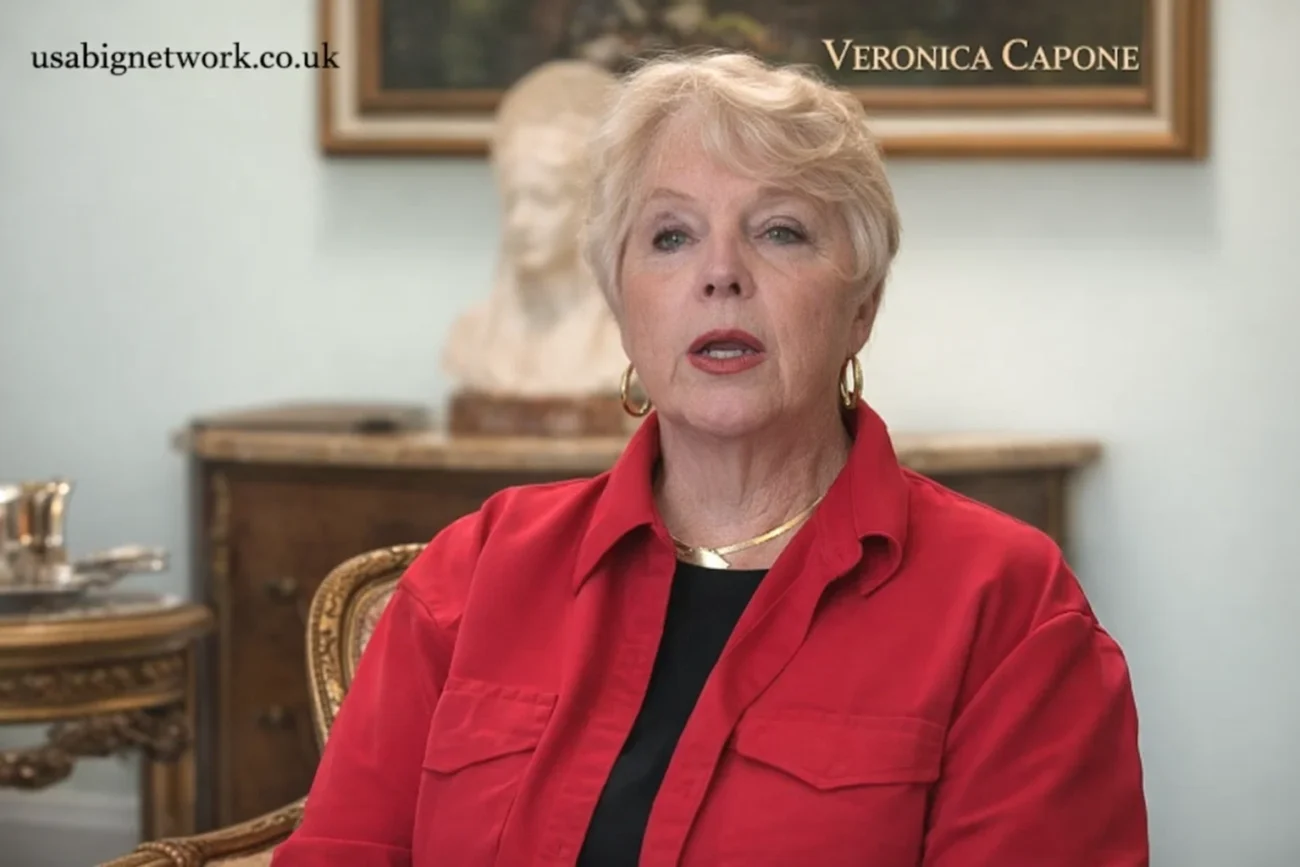
Understanding the Legacy of Veronica Capone
veronica capone lived a life that stood in contrast to the legacy most often associated with her famous family name. As the granddaughter of Al veronica capone and the eldest daughter of Albert Francis “Sonny” Capone, she inherited a family history shaped by crime, national headlines, and Hollywood-level mythologizing. Yet her personal story is one of quiet dignity, compassion, and private achievement. While the public often gravitates toward her grandfather’s criminal past, Veronica’s life offers a far more nuanced and deeply human story—one that reveals how a person can reshape a narrative overshadowed by notoriety.
Her experience growing up within the Capone lineage presents a compelling portrait of resilience. Instead of leaning into the infamy attached to her surname, veronica capone Veronica spent her life building meaningful relationships, nurturing a loving family environment, and establishing a professional identity that had nothing to do with organized crime. For those seeking a fuller understanding of Al Capone’s descendants and the truth behind their lives beyond the spotlight, Veronica’s story offers rare insight into how one woman transformed a complicated inheritance into a legacy marked by integrity and humanity.
Early Life, Family Roots, and Childhood in Miami
Veronica Capone was born on January 9, 1943, in Miami Beach, Florida, during a period when her family was undergoing dramatic transitions. Her father, Albert Francis “Sonny” Capone, was the only child of Al Capone and Mae Coughlin. By the time Veronica was born, her grandfather had already served his prison sentence and was living quietly in Florida, veronica capone suffering from advanced neurosyphilis. Although Veronica was still a baby when he died in 1947, she grew up aware that her family name carried an immense historical weight.
Her mother, Diana Ruth Casey, played a vital role in ensuring Veronica and her siblings—Patricia (also called Diane), Barbara, and Teresa—experienced a stable upbringing rooted in normalcy rather than scandal. Growing up in Miami Beach and Miami Shores, veronica capone Veronica enjoyed a childhood filled with sunshine, school routines, family gatherings, and ordinary friendships. The Capone family made a deliberate effort to distance themselves from the violent legacy of the Chicago Outfit, focusing instead on building a quiet, private life centered on love, stability, and moral grounding.
Despite the effort to create a normal environment, the weight of the Capone name was impossible to avoid completely. veronica capone Veronica learned early on that even strangers carried preconceived ideas about her family. Still, her parents emphasized the importance of character over reputation, teaching her that her identity would be defined not by her ancestry but by her actions. This foundation allowed Veronica to develop into a compassionate, grounded, and thoughtful woman whose life followed a path entirely different from the mythologized history of her family.
Life Under the Shadow of an Infamous Name
Being the granddaughter of one of the most infamous figures in American history shaped Veronica’s life in subtle but significant ways. Al Capone’s legacy dominated popular culture for decades, creating an aura of fascination, fear, and myth around the Capone name. Movies, books, academic studies, and documentaries often portrayed him as a criminal mastermind, veronica capone turning the Capone surname into a global symbol of organized crime. This meant that for Veronica, encounters with new people sometimes involved unspoken assumptions and curiosities.
Yet Veronica chose to embrace a private and reserved lifestyle, veronica capone demonstrating a maturity beyond her years. Family members described her as intellectually grounded and emotionally composed, someone who understood the complexities of her heritage but refused to let it dictate her identity. She did not grant interviews, veronica capone exploit the family past, or seek public attention. Instead, she lived with dignity, refusing to be defined by historical sensationalism.
Her strength came from a profound ability to separate myth from reality. veronica capone She understood that the world viewed her grandfather through a lens shaped by decades of media representation, veronica capone but she also knew him only through stories shared within the family—stories that depicted him in ways that contradicted much of the public narrative. This duality—public infamy contrasted with private humanity—shaped how Veronica navigated her life, always favoring empathy over judgment and substance over spectacle.
Marriage, Family Life, and Personal Relationships
In 1976, Veronica entered a new chapter in her life when she married Gordon Peterson, a loving and supportive partner with whom she built a deeply fulfilling life. Their marriage was marked by stability, respect, and companionship, veronica capone qualities that defined Veronica’s relationships as a whole. She embraced her role as a stepmother to Gordon’s children, creating meaningful connections built on care and understanding. Though she did not have biological children of her own, she played a central role in her blended family, embodying warmth and generosity in her interactions.
The couple eventually made their home in Auburn, California, a peaceful community far removed from the media attention that followed the Capone name. Here, veronica capone Veronica found the tranquility and privacy she valued, centering her life around relationships rather than public identity. Neighbors and friends described her as approachable, articulate, and quietly thoughtful—someone who offered authentic kindness without seeking recognition.
Her marriage to Gordon lasted more than three decades, a testament to the strength of their bond. Together, they built a life defined by shared routines, travel, meaningful conversations, and a commitment to family .veronica capone Veronica’s ability to create harmony in her personal life shows how fully she had redefined the meaning of the Capone legacy, transforming it from one marked by violence into one anchored in compassion.
Professional Life and Two Decades in the Bay Area
Although Veronica never sought public visibility, she built a solid professional life, working for more than twenty years in the San Francisco Bay Area. While the exact nature of her work remains private, records and family accounts describe her as a committed, reliable, and highly competent employee. She worked in administrative roles that required diligence, communication, and strong organizational skills, traits she demonstrated consistently throughout her career.
What stands out is her dedication to creating a professional identity entirely separate from her family history. She wanted to be valued for her abilities, not recognized for her surname. Colleagues who knew her during these years remember her as someone who maintained professionalism and integrity, never allowing her background to overshadow her work environment. Her decision to keep her heritage private in the workplace further reflects her lifelong desire to build an identity rooted in her own achievements.
Her career in the Bay Area highlights a theme that runs throughout Veronica’s life: the ability to live authentically even in the face of a complicated legacy. She understood that her name would always carry historical implications, yet she chose to build a life defined by steady work, kindness, and meaningful interaction with the world around her.
Compassion, Humanitarianism, and Quiet Influence
Veronica’s gentle nature and humanitarian spirit made her deeply respected by those who knew her. She was not the kind of person who sought out accolades or public praise, but rather someone who expressed compassion through everyday actions. Whether offering support to friends during difficult times, caring for family members, or volunteering quietly in her community, she made a difference through presence rather than performance.
People close to her often spoke of her empathy and understanding. She had a way of listening fully, offering reassurance without judgment, and creating a sense of safety for those around her. These qualities made her a natural source of comfort and stability, and her kindness became a defining aspect of her personal legacy.
Her humanitarian contributions were not the kind found in headlines but the kind that shape lives on a personal level. Through simple acts of generosity and consistent emotional support, she created a ripple effect of goodness—a stark contrast to the destructive legacy associated with her grandfather’s criminal empire. In this way, Veronica redefined what it meant to carry the Capone name, transforming it into a symbol of compassion rather than notoriety.
Her Battle With Acute Myelogenous Leukemia
In 2007, Veronica’s life took a difficult turn when she was diagnosed with Acute Myelogenous Leukemia (AML), a rapidly progressing cancer that affects the blood and bone marrow. Despite the seriousness of her condition, she faced her diagnosis with courage, optimism, and remarkable emotional strength. She underwent a range of treatments, including chemotherapy and specialized clinical care, always expressing hope not only for her own recovery but also for contributing to greater understanding of the disease.
Throughout her illness, Veronica remained surrounded by her husband, siblings, and extended family. Their support formed a protective circle of love that sustained her through the most challenging moments of her treatment. Those who witnessed her battle against AML described her grace, resilience, and refusal to yield emotionally, even when faced with the realities of aggressive cancer.
On November 17, 2007, Veronica passed away at the age of 64 in Auburn, California. Her final days reflected the essence of her life: quiet dignity, emotional strength, and the presence of loved ones who cherished her deeply. She left behind not just memories but a profound example of how adversity can be faced with courage and unwavering grace.
The Enduring Legacy of Veronica Capone
Veronica Capone’s legacy is rooted not in fame but in transformation. She inherited a name associated with one of the darkest chapters of American organized crime, yet she lived her life with the opposite values—compassion, humility, professionalism, and emotional generosity. Her story challenges the idea that ancestry determines destiny, offering instead a narrative of resilience and personal choice.
Her siblings, particularly Patricia (Diane), have spent years preserving the family’s private history, correcting public misconceptions about their grandfather, and shedding light on the human realities behind the myth. These efforts help place Veronica’s life in a larger context, showing how the Capone family evolved over generations, moving away from infamy toward healing, introspection, and emotional renewal.
Today, Veronica’s life stands as a reminder that history is not merely inherited—it is rewritten through actions, values, and the human capacity for change. In choosing a life defined by love and integrity, she transformed the Capone legacy in a way that continues to inspire those who learn her story.
Conclusion
Veronica Capone’s life provides a compelling reminder that a family name does not define a person’s destiny. Born into one of the most infamous lineages in American history, she consciously chose a path rooted in compassion, humility, and quiet perseverance. Instead of embracing the notoriety attached to the Capone surname, she built a life grounded in love, meaningful relationships, and personal integrity. Her journey illustrates how an individual can rise above public perception, transforming a legacy of criminal history into one marked by kindness and emotional strength.
Her story also humanizes the broader Capone family, showing how later generations sought peace and normalcy despite the shadows cast by the past. Through her professional dedication, her deep bonds with family, and her courage in the face of illness, Veronica demonstrated that true legacy is created through everyday actions rather than historical reputation. She may not appear in the headlines that immortalized her grandfather, but her life stands as a powerful testament to resilience, character, and the ability to rewrite one’s own narrative.
