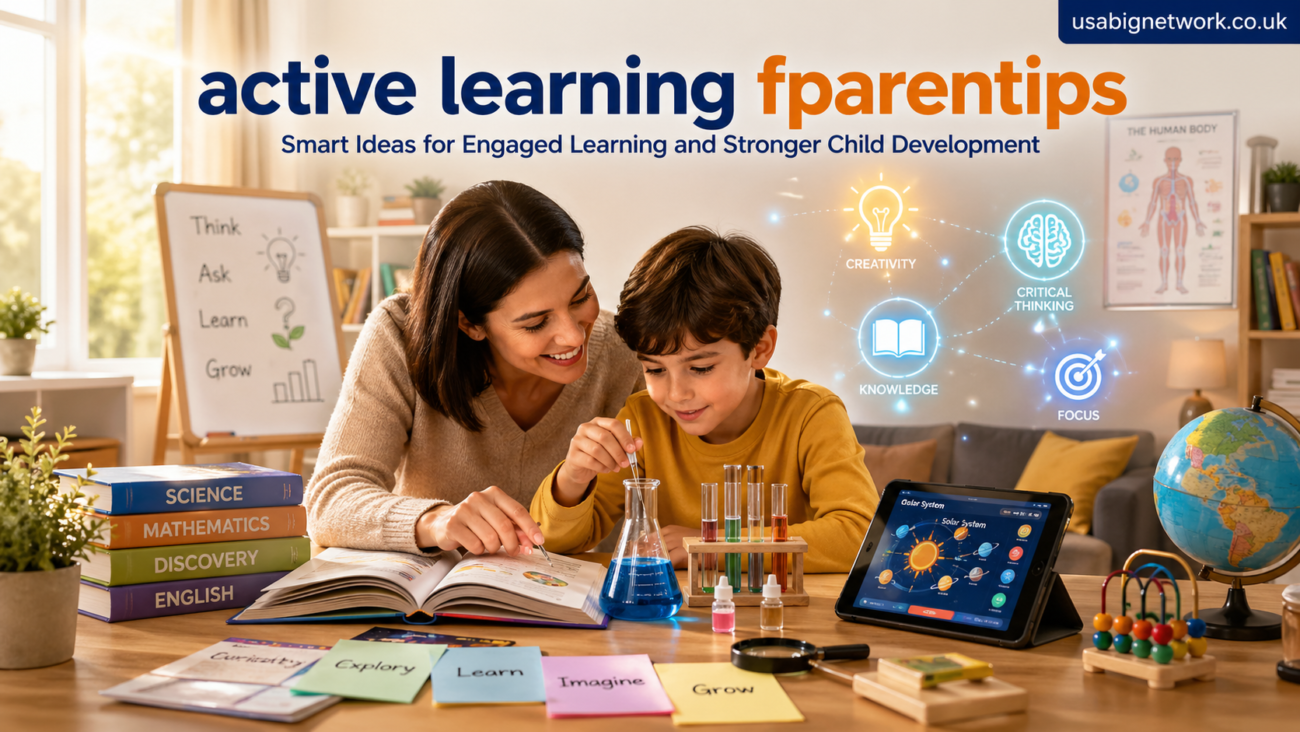
Introduction to Active Learning Fparentips
Active learning fparentips is a modern parenting approach that focuses on helping children learn through direct engagement, curiosity, and real-life experiences. Instead of relying only on traditional teaching methods like memorization or passive listening, this method encourages children to actively participate in the learning process. Parents play a key role by guiding, supporting, and creating opportunities for their children to explore the world around them.
This approach has gained popularity because it aligns with how children naturally learn. Studies in child development and educational psychology show that children retain information better when they are involved in hands-on activities and problem-solving tasks. active learning fparentips Active learning is not limited to school settings; it can happen at home, during playtime, or even in everyday routines like cooking or shopping.
The idea behind active learning fparentips is simple but powerful: when children are engaged and interested, learning becomes meaningful and enjoyable. This creates a strong foundation for lifelong learning and helps children develop essential skills such as critical thinking, creativity, and independence.
Understanding the Concept of Active Learning
active learning fparentips Active learning is a teaching and parenting method that emphasizes participation, interaction, and engagement. Unlike passive learning, where children simply listen or observe, active learning requires them to think, question, and apply knowledge. This approach is supported by educational research, active learning fparentips which shows that learners who actively engage with material are more likely to understand and remember it.
In the context of parenting, active learning fparentips involves creating opportunities for children to explore their interests and learn through experience. For example, instead of explaining how plants grow, parents can encourage children to plant seeds and observe the growth process. active learning fparentips This hands-on experience makes the learning more memorable and meaningful.
The concept also includes encouraging curiosity and allowing children to ask questions. When children feel free to explore and inquire, active learning fparentips they develop a deeper understanding of the world around them. This method helps build confidence and a positive attitude toward learning.
Key Principles of Active Learning in Parenting
Active learning fparentips is built on several important principles that guide how parents support their child’s development. One of the main principles is engagement. Children should be actively involved in what they are learning, active learning fparentips whether it is through discussion, experimentation, or creative activities. This involvement helps them connect with the material on a deeper level.
Another principle is exploration. Children learn best when they are allowed to explore their environment and discover things on their own. active learning fparentips Parents should provide guidance but avoid controlling every aspect of the learning process. Giving children the freedom to explore helps them develop independence and problem-solving skills.
The third principle is relevance. active learning fparentips Learning becomes more effective when it is connected to real-life situations. Active learning encourages parents to use everyday experiences as teaching moments. This not only makes learning more practical but also helps children see the value of what they are learning.
Benefits of Active Learning for Children
Active learning offers numerous benefits that contribute to a child’s overall development. One of the most significant advantages is improved understanding and retention of information. active learning fparentips When children actively participate in learning, they are more likely to remember what they have learned because they have experienced it firsthand.
Another benefit is the development of critical thinking skills. Active learning encourages children to ask questions, analyze situations, and find solutions. These skills are essential for academic success and for dealing with real-life challenges. Children who practice active learning are better equipped to think independently and make informed decisions.
Active learning also supports emotional and social growth. When children engage in interactive activities, they learn how to communicate, collaborate, and express their ideas. This helps build confidence and improves their ability to interact with others, which is important for both personal and professional success in the future.
Practical Active Learning Strategies for Parents
Parents can easily incorporate active learning into their daily routines without needing special tools or resources. One effective strategy is to ask open-ended questions that encourage children to think and express their ideas. For example, instead of asking a simple yes-or-no question, parents can ask questions that require explanation or reasoning.
Another strategy is to involve children in everyday activities. Tasks such as cooking, cleaning, or organizing can become valuable learning experiences. For instance, measuring ingredients while cooking can teach basic math skills, while following instructions can improve problem-solving abilities. These activities also help children feel responsible and capable.
Reading and storytelling can also be transformed into active learning experiences. Parents can pause during a story to ask questions, discuss characters, or predict what might happen next. This not only improves comprehension but also makes reading more interactive and enjoyable.
Active Learning Activities for Different Age Groups
Active learning activities should be adapted to suit the age and developmental stage of the child. For younger children, learning through play is highly effective. Activities such as building with blocks, drawing, and role-playing help develop cognitive and motor skills while keeping children engaged.
For school-aged children, active learning can include hands-on projects, experiments, and discussions. Parents can encourage children to explore topics they are interested in and guide them in finding answers. This approach helps children take ownership of their learning and develop a sense of curiosity.
Teenagers can benefit from more advanced forms of active learning, such as problem-solving tasks and real-world applications. Parents can support them by encouraging independent thinking and providing opportunities to explore their interests. This helps teenagers develop critical skills that will be useful in their future education and careers.
Creating an Effective Learning Environment at Home
A supportive learning environment is essential for active learning to be successful. Parents do not need to create a perfect or expensive setup; what matters most is fostering a positive and encouraging atmosphere. Children should feel comfortable asking questions and expressing their ideas without fear of judgment.
Reducing distractions is another important aspect of creating an effective learning environment. While technology can be beneficial, excessive screen time can limit active engagement. Parents should encourage activities that promote interaction and creativity rather than passive consumption.
Consistency also plays a key role. Active learning should be integrated into daily routines so that it becomes a natural part of the child’s life. When children regularly engage in meaningful learning experiences, they develop a habit of curiosity and exploration.
Common Challenges and How to Overcome Them
While active learning offers many benefits, parents may face challenges when trying to implement it. One common challenge is lack of time. Many parents have busy schedules, making it difficult to plan activities. However, active learning does not require extra time; it can be incorporated into everyday routines with small adjustments.
Another challenge is maintaining a child’s interest. Children may sometimes lose focus or become distracted. To address this, parents can choose activities that align with their child’s interests and allow them to take the lead. This makes learning more engaging and enjoyable.
Some parents may also feel unsure about how to guide their child’s learning. It is important to remember that parents do not need to have all the answers. Their role is to support and encourage exploration rather than provide solutions. This approach helps children develop independence and confidence.
The Role of Parents in Active Learning
Parents play a crucial role in supporting active learning. Their involvement and attitude toward learning have a significant impact on their child’s development. By showing interest and enthusiasm, parents can motivate their children to engage in learning activities.
One of the most important roles of parents is to act as facilitators. This means guiding children, asking questions, and providing support without taking control. When children are given the freedom to explore and make decisions, they become more confident and independent learners.
Building a strong relationship with children is also essential. Open communication and emotional support create a safe environment where children feel comfortable expressing their ideas and taking risks. This helps them develop a positive attitude toward learning.
Conclusion: Embracing Active Learning in Daily Life
Active learning fparentips is a powerful approach that transforms how children learn and grow. By encouraging participation, curiosity, and real-life experiences, parents can create meaningful learning opportunities that go beyond traditional methods. This approach not only improves academic performance but also supports emotional and social development.
The key to successful active learning is consistency and flexibility. Parents do not need to follow strict rules or create complex plans. Instead, they can focus on making small, intentional changes in their daily routines to encourage engagement and exploration.
In the long run, active learning helps children develop essential life skills such as critical thinking, creativity, and independence. By embracing this approach, parents can support their child’s growth and help them build a strong foundation for lifelong success.
