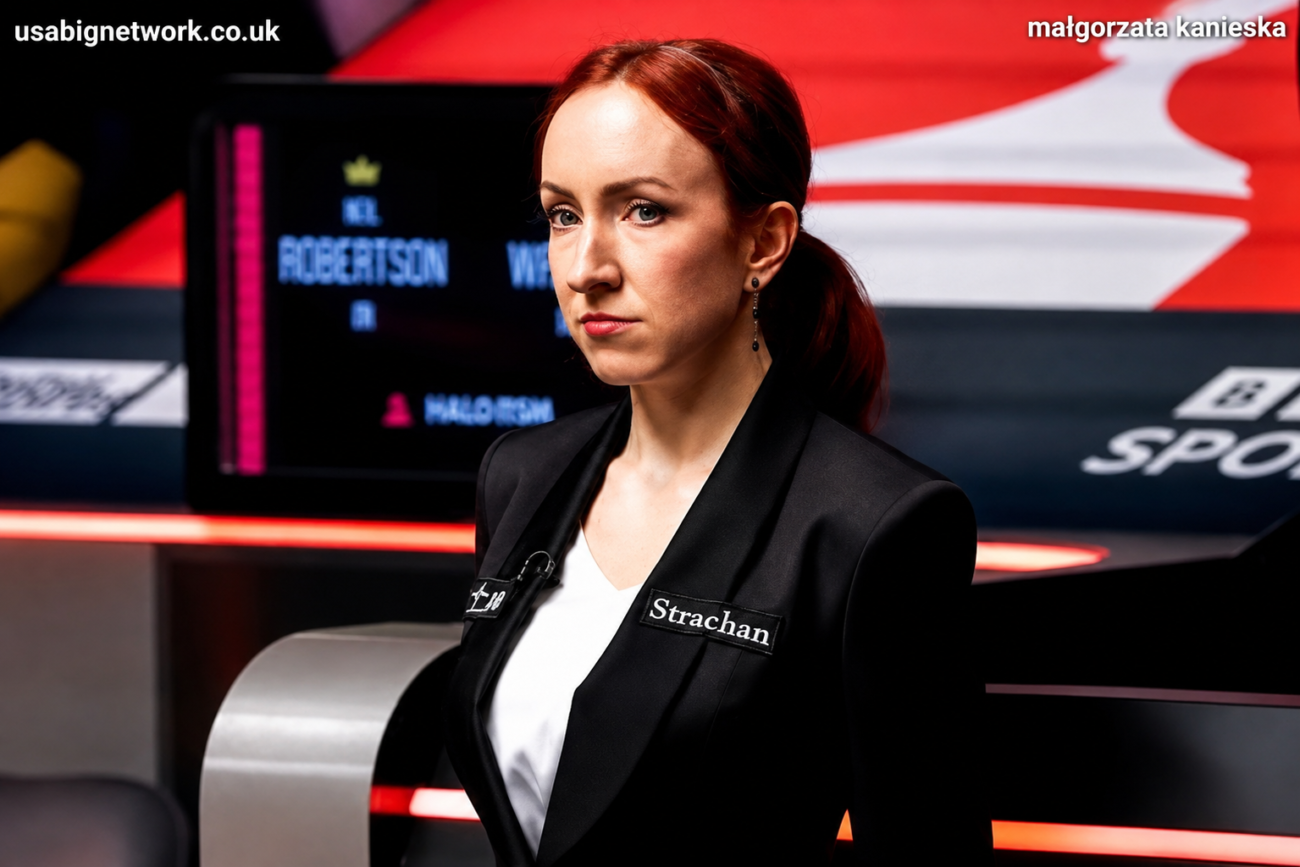
Małgorzata Kanieska is a name that has become increasingly familiar to followers of professional snooker, particularly those interested in the officials who help maintain the sport’s highest standards. As a Polish snooker referee, she has built an impressive career through patience, discipline, knowledge of the rules, and years of experience at major tournaments. Her journey is especially interesting because she did not begin with the intention of becoming one of the sport’s recognizable referees. Instead, her interest in snooker gradually developed into a professional career that eventually took her to the famous Crucible Theatre.
Kanieska’s story also stands out because professional snooker is only one part of her working life. Her education and professional background extend into technical and aviation-related fields, giving her career an unusual combination of sport, engineering, and aviation. From her early interest in televised snooker to officiating important matches involving some of the world’s best players, her career shows how dedication can turn an unexpected interest into a lasting professional achievement.
Who Is Małgorzata Kanieska?
Małgorzata Kanieska is a Polish professional snooker referee associated with international tournaments and major events on the professional snooker calendar. She was born on December 26, 1988, and comes from Poland. Over the course of her career, she has progressed from early European competitions to increasingly important professional assignments, eventually reaching the World Snooker Championship at the Crucible.
Unlike professional snooker players, referees work behind the scenes and rarely receive the same level of public attention. Their decisions, however, are central to every match. A referee must understand the rules, follow the score, monitor the table, manage situations involving fouls, and remain completely focused throughout the contest. Kanieska has developed her reputation through precisely this kind of professional consistency.
How Małgorzata Kanieska Started in Snooker
Kanieska’s connection with snooker began through watching the sport on television. During the 2000s, televised coverage introduced her to professional snooker and encouraged her to learn more about the game. What made her interest unusual was her curiosity about the rules and refereeing rather than simply following the most famous players.
That curiosity eventually encouraged Kanieska to take a snooker referee course. Her first professional refereeing assignment came at the Prague Classic in 2010. This was an important beginning because professional refereeing requires much more than simply knowing how points are awarded. Officials must learn how to position themselves around the table, communicate clearly, recognize fouls, manage difficult situations, and maintain concentration while matches can continue for several hours.
The Development of Her Refereeing Career
After gaining early experience, Kanieska began receiving opportunities at increasingly important events. Her career included European Tour competitions, Players Tour Championship events, and qualifying matches connected with major ranking tournaments. These assignments helped her gain the experience needed to work alongside established professional players.
One of the significant early milestones came when she officiated a televised match at the Warsaw Classic in 2011. Working in front of television audiences adds another level of pressure because every decision can be examined closely. For an official, professionalism means remaining calm regardless of the importance of the frame, the reputation of the players, or the attention surrounding the match.
Małgorzata Kanieska at Major Tournaments
As her experience grew, Kanieska became involved in a wide range of professional tournaments. Her refereeing record has included events such as the Gdynia Open, Gibraltar Open, and Tour Championship. These competitions brought her into contact with many leading players and provided opportunities to work at increasingly demanding levels of professional snooker.
Her involvement in important tournaments demonstrates how referees develop their careers gradually. There is no shortcut to becoming a trusted professional official. Experience at smaller and qualifying events creates the foundation for larger assignments, while consistency and knowledge of the rules help officials earn opportunities at higher-profile competitions. Kanieska’s progression reflects this long-term development.
Her Connection With the World Snooker Championship
One of the most important achievements in Kanieska’s career came when she reached the final stages of the World Snooker Championship at the Crucible Theatre in Sheffield. The Crucible is one of the most famous venues in snooker and has hosted the championship since 1977. For players and officials alike, appearing there represents a major career milestone.
Kanieska’s Crucible appearance in 2025 was particularly meaningful because it represented the culmination of many years of professional refereeing. Her journey from watching snooker on television and taking a referee course to working at the sport’s most prestigious championship demonstrates the remarkable progression of her career. It also brought greater attention to her work and her unusual path into professional snooker.
Małgorzata Kanieska and Maximum Breaks
Another interesting part of Kanieska’s refereeing record is her involvement in matches featuring maximum breaks. In snooker, a maximum break of 147 points requires exceptional precision. A player must pot all 15 reds with blacks and then clear the six colors in their correct sequence. Because maximum breaks are rare, they are among the most memorable moments in professional snooker.
Kanieska has been associated with several officially recognized maximum-break matches during her career. One notable example involved former world champion John Higgins. Refereeing a 147 requires exceptional concentration because the official must maintain accurate scoring and follow every stage of the break. A referee’s role becomes especially visible during such moments because even a small error in scoring or procedure could affect the historical record.
Her Education in Aerospace Engineering
Away from the snooker table, Kanieska has an impressive academic background. She studied aerospace engineering, also described through her studies in aeronautics and astronautics, at Warsaw University of Technology. Her engineering education is an unusual but fascinating part of her biography because it demonstrates that her professional interests extend far beyond sport.
Engineering requires accuracy, logical thinking, attention to detail, and the ability to follow complex procedures. These qualities are also valuable in professional refereeing. Although aerospace engineering and snooker officiating are completely different fields, both require discipline and a strong understanding of technical information. Kanieska’s academic background therefore adds another dimension to her story.
Her Career Beyond the Snooker Table
Kanieska’s professional life has also included work connected with aviation. Reports surrounding her Crucible appearance described her as working for Polish Airlines. Her aviation responsibilities involve a very different type of professional environment from snooker, yet both careers demand reliability and careful decision-making.
Balancing a full-time professional role with international snooker commitments is not simple. Tournaments can require travel, long days at venues, and intense concentration. Kanieska has demonstrated that it is possible to maintain a demanding career outside sport while continuing to develop at the highest level of professional refereeing. This makes her career particularly distinctive among snooker officials.
Małgorzata Kanieska and Women in Snooker Officiating
Kanieska’s career is also relevant to the growing visibility of women in professional snooker officiating. Referees play an essential role in the sport, and female officials have increasingly become a familiar presence at major competitions. Their participation demonstrates that knowledge, professionalism, and experience are the qualities that ultimately determine success in refereeing.
For Kanieska, her achievements have come through years of developing her skills rather than through publicity. Her work demonstrates the importance of female officials in professional snooker while also showing how international opportunities can develop from a local interest in the game. Her career provides an encouraging example for anyone interested in entering sports officiating.
The Legacy of Małgorzata Kanieska
Małgorzata Kanieska’s career is remarkable because of the range of experiences that have shaped it. She began with an interest in televised snooker, learned the rules seriously, completed referee training, and entered professional competition. Over the years, she worked at European events, televised matches, ranking competitions, and tournaments involving some of the biggest names in the sport.
Her appearance at the Crucible represents one of the clearest highlights of that journey, but it is only one part of a much larger story. Her education in aerospace engineering, professional work in aviation, experience with maximum-break matches, and continued involvement in international snooker all contribute to a career that is unusual and inspiring. Kanieska shows that success does not always follow a traditional path. A hobby can become a profession, and different areas of expertise can exist successfully alongside one another.
Conclusion
Małgorzata Kanieska has established herself as an accomplished figure in professional snooker refereeing through years of dedication and experience. Her journey from discovering snooker through television to officiating major international tournaments demonstrates the value of curiosity, preparation, and persistence. Reaching the Crucible for the World Snooker Championship represents a particularly important achievement in a career built steadily over many years.
What makes her biography even more distinctive is the life she has built beyond snooker. Her aerospace engineering education and aviation career show a strong technical side, while her work as a referee reflects her passion for the game and its rules. For snooker followers, Kanieska represents an important reminder that the sport’s history is shaped not only by the players who make the big breaks, but also by the highly skilled officials who ensure that every match is played fairly and professionally.
